
Alice Springs history begins with Mparntwe
Alice Springs history reaches beyond the telegraph buildings: Mparntwe is the Arrernte name for Alice Springs, and the Central Arrernte are its Traditional Owners. Arrernte language, care for Country and cultural rules remain part of life here. Start with that living connection rather than treating Aboriginal culture as a chapter that ended when European infrastructure arrived.
A historical visit and an art workshop offer different ways into the subject. Choose the historical outing for a guide, entry fees and accommodation transfers; choose the workshop for an introduction to Aboriginal art and the chance to paint a small canvas. Keep a separate day for the West MacDonnell Ranges if the landscape is also a priority.
Our picks: history and culture
The art workshop provides canvas and paint for a hands-on introduction. For a guided historical outing, accommodation pickup is included; the education visit has a local guide.
Hand-picked tours, booked through GetYourGuide and Viator. Prices are indicative starting prices in US dollars (as of November 2026). Tap a tour for live availability and the current price in your currency.
Alice Springs history outing
- Experienced guide
- Afternoon tea
- Entry fees
Travel between stops in air-conditioned transport.
Check availability →
Aboriginal art workshop in Alice Springs
- Introduction to Aboriginal art and culture
- Canvas and paint provided
Paint a small piece and ask questions during the workshop.
Check availability →
Explore the history of remote education
- Local guide
- All activities
The visitor centre is closed at weekends and from 24 December 2026 through 3 January 2027.
Check availability →Historical visits and Aboriginal art
Compare a guided historical outing with transfers, a canvas-painting workshop and a visit about education across the outback.
Mparntwe and living Arrernte culture
Mparntwe sits within a cultural landscape whose meaning extends beyond the town centre. Arrernte creation traditions connect the surrounding country with the caterpillar beings Ayepe-arenye, Ntyarlke and Utnerrengatye. These are cultural traditions to approach respectfully, alongside the continuing relationships between people, language and land.
Emily and Jessie Gaps in the East MacDonnell Ranges contain rock art associated with Caterpillar Dreaming. Do not photograph or touch the art, and do not climb the rocks in or around the gaps. At Corroboree Rock, a registered sacred site, stay on the marked path; drones and camping are prohibited. A workshop booking is an opportunity to learn and create, rather than permission to enter sacred places.
The Telegraph Station and The Bungalow
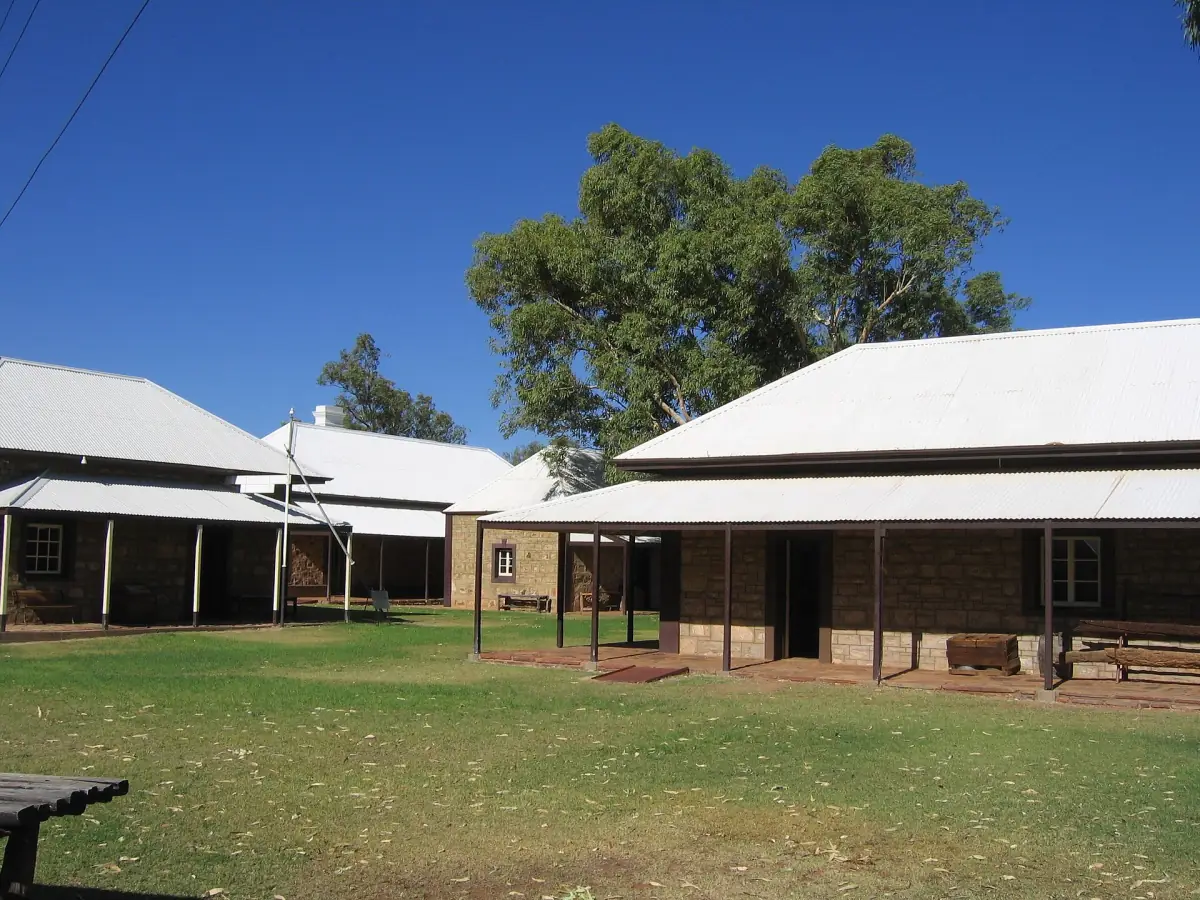
The Telegraph Station was established in 1871, and the Overland Telegraph was completed in 1872. The name Alice Springs originally referred to the waterhole near the station and commemorates Alice Todd, wife of Charles Todd. Rail reached Stuart in 1929, and the town was officially renamed Alice Springs in 1933. These dates describe European infrastructure and administration, rather than the beginning of human settlement.
The Telegraph Station later served as The Bungalow, an institution for Aboriginal children. Include that history when visiting the precinct instead of reducing the site to communications equipment and stone buildings. The place carries more than one historical story, and allowing time for interpretation is more useful than simply collecting photographs.
The historical precinct normally opens from 08:00 to 16:00, with closures on 25 and 26 December and 1 January. Those hours apply to the museum precinct, rather than the whole reserve. Plan a summer visit around the precinct itself and arrange any guided departure separately. The historical outing offered here includes a guide, entry fees, air-conditioned transport, afternoon tea and accommodation pickup and drop-off.
Outback education and medical care
The School of the Air visitor experience explains education across the outback, while the flying-doctor visitor facility on Stuart Terrace adds the subject of remote medical care. These visits complement the telegraph story by looking at services across distance. The education visit offered here includes a local guide and activities.
The School of the Air is closed on weekends and from 24 December 2026 to 3 January 2027 inclusive. Live lessons depend on what is possible during the visit; recordings provide an alternative. Keep the visit flexible around the school programme rather than building the day around a promised live classroom connection. For a wider comparison of city visits and longer journeys, use the Alice Springs tours guide.
Art workshops and guided historical visits
The Aboriginal art workshop includes an introduction to art and culture, canvas and paint, and an opportunity to ask questions while making a small painting. Transport, meals and drinks are separate. The meeting place is Olive Pink Botanic Garden, 27 Tuncks Road, so plan the journey there as part of the activity.
Guided historical visits suit travellers who want interpretation alongside the sights, while the workshop gives the afternoon a practical focus. Photograph only where permitted, and keep the rock-art restrictions at Emily and Jessie Gaps separate from ordinary town photography. Combine cultural visits with the wildlife guide for another perspective on the surrounding country, or return to the Alice Springs overview to organise the rest of the stay.
Questions about Alice Springs history
What does Mparntwe mean for a visit?
Mparntwe is the Arrernte name for Alice Springs, and the Central Arrernte are the Traditional Owners. A visit should recognise living culture, language and care for Country alongside the town's infrastructure history. Follow local access rules and approach cultural interpretation as part of the present, rather than only the past.
Can visitors photograph the rock art at Emily and Jessie Gaps?
No, the rock art at Emily and Jessie Gaps must not be photographed or touched. The Traditional Owners also ask visitors not to climb rocks in or around the gaps. Keep these specific cultural rules in mind when planning an outing, and use permitted views without treating sacred places as climbing stops.
Does the education visit guarantee a live lesson?
No, the School of the Air visit uses live lessons only when possible, with recordings as an alternative. The experience is closed on weekends and from 24 December 2026 to 3 January 2027 inclusive. Choose the visit for its introduction to remote education, rather than a promised connection to a particular class.